Aconcagua
6959m
ascent 2026/27
Choice of 2 itineraries, to suit your acclimatisation requirements
Climbing
Skill
Fitness
& Stamina
Course
overview
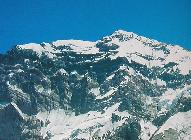
Aconcagua
is the “Seventh Summit” of South
America. At nearly 7000m high, it is the second
tallest of the 7 Summits, the only taller
one being Mount Everest. Its name comes from
the native Inca's who used to call the mountain
Ancocahuac, the 'White Sentinal'.
We
offer a choice of two very different itineraries, to give you options both of the style of expedition and inclusions that you require, and to make a better choice as to what suits you best for acclimatisation.
The
obvious primary aim of the expedition is to
summit Aconcagua 6959m, but this expedition
is much more than that. You will learn how
to adapt your climbing rate to your acclimatisation
level, which is an essential skill at altitude.
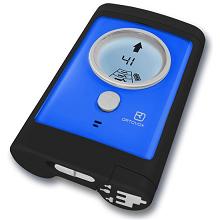
The guide carries a pulse oximeter to monitor
your acclimatisation.
A
key factor in the success of any expedition
is its how well rested and fed the team is,
and as the quote goes "an army runs on
its stomach"! We have taken this point
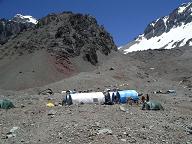
on board and have ensured that the base camp
is as comfortable as possible, and that it
provides good food. We use a local logistics
and guide team to provide full time base camps on both
sides of the mountain with these services:
Kitchen
& Mess Tents with electric lights, tables,
chairs
Food:
3 meals a day (inc packed lunch) & hot
drinks
Portaloo
/ Toilet Tent, Showers, & Equipment Store
Room
Staff:
trained cook, camp manager, and porters
Safety:
radios (HF & VHF 2m), Gammow bag, oxygen
Skills
& fitness:
no previous mountaineering experience is required,
but many have climbed an Alpine 4000m peak,
such as Mont Blanc before. Very good aerobic
fitness is required and upon
booking you will be sent an expedition dossier
with training training schedules. View
it here, and look at training plan
4.
Dates:
these
are listed in the column on the right, and
they show the live availability from our secure
online booking system. When you book online,
you receive immediate confirmation, your full
trip dossier, course specific kit list and
invoice.
Expedition
notes
Our
formula is to provide exceptional mountain logistics, to fully support you both on and off the mountain. It's the little details that really make the difference - Wifi in camps, good supplies of clean water, experienced guides, well briefed groups, private transfers, comfortable hotel in Mendoza.
Whilst
every effort will be made to adhere to the planned
itinerary, it must be realised that in this type
of adventurous travel, changes to the itinerary
may occur. Your final itinerary may differ in respect
of the places where you stay overnight. Please bear
this in mind, especially in the mountains!
We offer two types of Aconcagua expedition... Polish Traverse itinerary - these dates are guaranteed to operate, as soon as you book, and make a full traverse of the mountain, so you ascend one side of the mountain to reach the summit, and descend the other side on the normal route. This itinerary is great for acclimatisation, and allows you to see more of this stunning region, which is important to keep you motivated and locked in for your ascent. IFMGA guided itinerary - this trip has been developed by one of our Argentinian IFMGA guides, for a more tailored trip, with smaller groups. It's less commercial, and also ascends Cerro Vallecitos 5461m to build your acclimatisation before Aconcagua itself. This trip requires slightly more fitness, but pushes the acclimatisation harder, with the reward of another Andean summit, and an IFMGA guide leading you.
With
adventure travel, the unexpected is the norm in
these areas and, despite painstaking planning and
organisation, our adventure holidays can never be
taken for granted like regular holidays. Many of
the
places that we visit do not have the same quality
of emergency health and safety services that we
are used to in the developed world. Internal flights
can be cancelled, road transport is generally uncomfortable
and unreliable, and hotels and any star ratings
often do not approach the equivalent standards of
the West. If you are not prepared for this, you
should not book on this style of trip. We see these
factors as a selling point, and it really defines
for us what adventure travel is all about.
Itinerary written by Pablo, the lead IFMGA mountain guide
1
Arrival in Mendoza - Argentina (747 m).
Upon arrival in Mendoza's airport, there will be a transfer waiting and transfer to a
centrally located hotel at the heart of the city.
Mendoza is the wine capital of Argentina, worldwide known for it famous Malbec wines
that can be enjoyed with a indisputable Argentinian meat, once you try it, all other
wont be the same!
The temperatures in the summer can be very high, reaching up to 38 - 40 degrees,
which is quite the opposite of what people preparing for Aconcagua might expect.
On the afternoon, there will be an information meeting with the main mountain guide, who will provide all the relevant information about the next days itinerary and practical
details of the trip. Night in hotel.
2
Vallecitos Valley (2727 m)
On the morning, after breakfast, the guide/s will do a thorough gear check to each
team member. It is very important to make sure everybody has the right gear for the
endeavor ahead. In case someone is missing something or need to supply it, there will
be time to rent or buy at one of the Mendoza gear shops.
After this, the group will head out to have their Aconcagua climbing permits issued at
the National parks office located in down town.
In the early afternoon, the team will be driven to Vallecitos valley, which lies
southwest from the city on the route 7, the international highway that links Argentina
and Chile. After a 1 h drive, at the Potrerillos dam, the transport will take a secondary
road for around another hours heading up into the Vallecitos mountain area. The van
will drive all the way to the front door of the mountain hut (2727 m). It is important to
note, that this drive means an almost 2000 meters altitude gain and therefore the
team will spend 2 nights at the hut, in order to ensure a good acclimatization basis.
Early dinner and information briefing about the next day's activities. Night at the hut.
Included meals: Breakfast, dinner.
3
Climb: Cerro Loma Blanca (3664 m)
Today is the first climb of the program; the aim is Loma Blanca a close by trekking
summit, perfect to gain more altitude and improve acclimatization. The climb starts
from the hut and follows a side valley to the main Vallecitos valley. The trail ascents
(1.5 h) gently, reaching a col between the Loma Blanca and Arenales. After a rest to
enjoy the great view down to the lower Mendoza valley and the Potrerillos dam, the
trail will follow a wide ridge that head up towards the mountain summit (1,5 h). The
summit of Loma Blanca is one of the many summits along a ridge that rises
westwards. The view, if the weather is clear, will allow seeing the main Vallecitos
valley, part of the next days trails and the next climb Adolfo Calle. At the end of the
valley, the Vallecitos peak can be seen.
The descent (2 h) will be down by the southeast ridge until reaching the old ski lifters
and then down a broad track to the old ski station and further down to the road and
finally back to the hut, completing a circular hike. At the hut, a typical Argentinian
"asado" will be waiting for the hungry team!. Night in tents.
Ascent: 937 m / Descent: 937 m / Highest Altitude: 3664 m / Activity duration: 5 h
Included meals: Breakfast, Picnic, Dinner.
4
Vega Superior Campsite (3450 m)
After breakfast, the team will get ready to move upwards to the first campsite of the
trip: Vega Superior. It will be possible to leave some gear at the hut and should only
be taken the need equipment, as each member must carry his/her own stuff. The hike
is not very long and a good start for the days to come. First the ridge that passes by
other minor refuges until the Vallecitos River and then changing sides to take the
main valley. There will be 2 short steep sections until the reaching the hidden Vega
Superior camp that is located at the foot of the San Bernardo and Adolfo Calle peaks.
The whole hike will take about 2-3 hours, depending on the shape and acclimatization
of each person. After arrival, the team will make a short workshop on how to setup the
tents in both good and bad weather. Rest of the day is for rest and acclimatization.
Night in tents.
Ascent: 723 m / Highest Altitude: 3450 m / Activity duration: 3 h
Included meals: Breakfast, Picnic, Dinner.
5
Climb: Cerro Adolfo Calle (4267 m)
Adolfo Calle is a pointy peak that looks very steep from the camp; most of the ascent
is done over rocky terrain following a zigzagging trail. From the camp, the guides will
show the way over a ridge that leads up to the moraine, the climb is quiet demanding
and a good slow tempo is very important. After an hour, there is a col that opens into
an inner valley between the Adolfo Calle on the left and Stefanek peak on the right.
The path up the valley is easy and welcome after the steep section. 30 minutes later,
another steep ascent starts, this time heading west, there trail is well marked and has
a sequence of switchbacks that helps to win a lot of meters in a short time. After 1
hour, the inclination will decrease and there is a short scrambling part to reach the
summit. The climb is usually completed between 3-4 hours.
The summit is a rocky ridge with spectacular view to both the lower hot valleys of
Mendoza's valley and above to all the surrounding mayor peaks like: Vallecitos, El
Rincon, Loma Amarilla and the lower slopes of the areas giant: El Plata, a summit just
below 6000 meters.
The way down (2 h) will trace back the same path until the col, from there an even
steeper scree will lead all the way to the start of the ascent and few minutes later back
at the camp. Night in tents.
Ascent: 817 m / Descent: 817 m / Highest Altitude: 4267 m / Activity duration: 5 h
Included meals: Breakfast, Picnic, Dinner.
6
Acclimatization to El Salto (4288 m)
Relaxing morning start at the beautiful camping spot of Vega Superior. The idea today
is to do a hike (3 h) to the next Campsite "El Salto", have lunch and head back down
(2 h) for another night at Vega Superior. This day will provide the opportunity to have
an extra acclimatization day, reaching once again 4200 meters and sleeping at a lower
altitude. It is also perfect in case, any participant feels tired ort is having issues with
the altitude and need a bit more time to adapt. Night in tents.
Ascent: 638 m / Descent: 638 m / Highest Altitude: 4288 m / Activity duration: 5 h
Included meals: Breakfast, Picnic, Dinner.
7
El Salto Campsite (4288 m)
The sunrises from Vega Superior are some of the best in the trek, giving us a great
view up to Vallecitos eastern face, a scary looking side, but thankfully not our route of
ascent. After packing the camp down, the team will hike up (4 h) to El Salto, leaving
behind the green prairies for the alpine landscapes above 4000 meters. The way
through the Vallecitos valley is nice and slowly gains altitude. The last section to reach
the camp is the hardest section and it will be even more demanding due to the packs.
This ridge is known as "El Infiernillo" (the little hell), because of the steepness and in a
sunny day the temperature it can reach. Finally El Salto campsite (Waterfall camp),
receives its name from the waterfall that precipitates into the valley slightly below the
camp. The team will set up the tents, have lunch and then have a detail briefing about
the next day climb to Vallecitos, the main goal of the valley.
El Salto has an astonishing location with a great panorama down to the valley and all
the neighboring peaks giving an alpine atmosphere. An early dinner and the last
preparations before the climb. Night in tents.
Ascent: 638 m / Highest Altitude: 4288 m / Activity duration: 4 h
Included meals: Breakfast, Picnic, Dinner.
8
Climb: Cerro Vallecitos (5461 m)
The guides will provide an early breakfast around 4:00 AM and the team will move
around 5:00 AM. Vallecitos is not a technical climb, but it is a very long ascent and for
the first time the members will be reaching 5000 meters and hopefully, if the
conditions in the mountain, the physical shape and the acclimatization are all good
every body will reach the summit and also get the best possible glimpse to Aconcagua
and its huge south face.
The route ascents by a valley, that elevates along Vallecitos east flank. The terrain
gets steeper the higher the team moves. At a certain point, the trail will lead to the
left ridge of the valley and will follow it until about 5000 meters, from there a traverse
to the right will mark the way to the Vallecitos col located between Vallecitos to the
right and El Plata to the left. The col is at 5100 meters and from here the best view to
Aconcagua. It is here that one realizes how high the mountain is in relations to all the
others. By this time, the group has hiked for about 5 hours. After a short break, the
hike (1 h) will be by Vallecitos ridge, which lead strait to the summit. This last part is
spectacular and has amazing distant views, for example just before reaching the base
of the summit the Tupungato volcano will be visible. The last few meters (30 min) are
a bit of a very easy climb to reach the edgy summit.
The descent will be done taking the same trail, as during the climb. The average time
from the summit to the camp is between 3-4 hours. With this climb or attempt, the
team would have archived the best possible acclimatization for the attempt to
Aconcagua, while climbing and enjoying other mountains. Night in tents.
Ascent: 1173 m / Descent: 1173 m / Highest Altitude: 5461 m / Activity duration: 10
h
Included meals: Breakfast, Picnic, Dinner.
9
Penitentes (2630 m)
After a well-deserved rest and a good breakfast, the group will pack the camp down
and begin to descent to the hut. This hike will take about 4 hours, once at the hut a
transport will be waiting to take (2 h) the team for a good and juicy lunch at one of
Uspallacta's good restaurants. After lunch an hours drive along the mountainous area
that leads to a location known as Penitentes, the main entrance to Aconcagua Regional
Park.
The team will spend the night at a hotel, have a warm shower and sleep on a soft bed
after many nights in the mountains. This a recovery breaks both away from the
campsite life as well as a night at a much lower altitude. This is equivalent to putting
an oxygen mask on! Night in hotel.
Descent: 1561 m / Activity duration: 3 h
Included meals: Breakfast, Dinner.
10
Confluencia Camp (3409 m)
The vans will pick up the team about mid morning and take them (20 min) to the park
main entrance, where the guides will help with all the formalities related with the
permits and information regarding the park rules. A further 5 min. drive to the parking
lot where the head of trail is (2821 m).
Today's hike is a relaxing one and everybody will be doing great due to the
accomplished acclimatization and good shaped archived during the previous days.
From Penitentes all the way to Plaza de Mulas, Aconcagua's base camp, there will be
pack animals to take all the gear including the team's personal equipment.
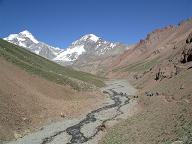
The group will walk into a completely new landscape, much dryer and arid, but with its
own charm! The colored mountains and the vastness of the place reminds of Tibet, no
wonder this valley was chosen to film Seven Years in Tibet. After 45 min. hike there is
a bridge locally known as Brad Pitts bridge, a legacy of the film's production team. The
river Horcones flows down with fury, the trail will follow the right margin of the river
heading rightwards towards an inner valley where Confluencia camp is placed.
Confluencia's name mean conjunction and it was given a long time ago, when the
campsite was located lower in the Horcones valley, precisely at the conjunction of the
Upper Horcones and Lower Horcones Rivers. Now the campsite lies at another spot,
but keeps the old name. This is the first of the 2-fixed camps in Aconcagua. Night in
tents.
NOTE: At Confluencia camp there is a mandatory medical check, which will be booked
by the guides and informed to the team members.
Ascent: 588 m / Highest Altitude: 3409 m / Activity duration: 4 h
Included meals: Breakfast, Picnic, Dinner.
11
Plaza de Mulas (4364 m)
Continuing through the Horcones valley, after leaving the camp, the path will drop
into a gorge and cross the Lower Horcones River, then climb up overlooking the Plaza
Francia's valley where the famous South face stands. The Horcones valley opens up
into a wide broad valley, which follows the mountain by the East flank. The colors and
shapes of both rivers and mountains are an unforgettable spectacle. The hike is very
pleasant as the gain in altitude is slow and progressive. The landscapes changes as
dramatically from the wide riverbed, known as Playa Ancha, to a narrower valley with
a more pronounce ascent from a place called Piedra Ibanez the lunch spot until
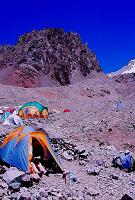
Aconcagua's base camp: Plaza de Mulas. Base camp is located in a great spot, just at
the foot of the mountain and also surrounded Cerros Cuerno, Catedral, Horcones,
Bonete and some few more. A real alpine atmosphere. Night in tents.
Ascent: 955 m / Highest Altitude: 4364 m / Activity duration: 8 h
Included meals: Breakfast, Picnic, Dinner.
12
Plaza de Mulas (4364 m) - Free/rest day
After the long hike from Confluencia a well deserve rest day at Plaza de Mulas is a
must. Plaza de Mulas is the mountains more concurred camp with all imaginable
commodities like: well prepared camps, bathrooms, showers, bars and little
restaurants. It also has its own art gallery, the highest in the world certified by the
Guinness record Book, run by the Argentinian artist Miguel Doura.
If some team members feel like a more active day, it is possible to do a short hike to
the old hotel, now closed, or to take a look at the glacier descending from Cerro
Cuerno.
It is easy to enjoy a leisure day in Mulas! Night in tents.
NOTE: At base camp there is a mandatory medical check, which will be booked by the
guides and informed to the team members.
Included meals: Breakfast, Picnic, Dinner.
13
Plaza Canada - Camp I (4910 m)
After enjoying a plentiful breakfast and having packed for the summit climb, the team
will start the ascent towards the final goal: Aconcagua's summit. The first part up to a
plaza called "El Semaforo" (the traffic light) takes about 1,5 hour. This is a place with
a great view down to Plaza de Mulas. From this point the trail does a lots of switch
backs and the ascent is slow but constant, about half way up, there will be a lunch
stop at Conway stones/towers. Then the trail moves towards the north for a final steep
section up to camp 1. Canada camp has a great panoramic view Eastwards into Chile
and usually a fantastic sunset! Night in tents.
Ascent: 546 m / Highest Altitude: 4910 m / Activity duration: 4 h
Included meals: Breakfast, Picnic, Dinner.
14
Nido de Condores (Condor's Nest) - Camp II (5574 m)
The morning light will hit the camp at about 9 AM and the group will get ready to
move up, heading to the famous Nido de Condores or Camp 2 (Eagle's nest). The trail
traverses northwards, switching back at a place known as Cambio de Pendiente (Hills
side change) heading southwards. During the hike, there is a perfect view of a good
part of the summit day trail, strait up from this spot. Towards the East the
Argentinian flag marks the location of camp 2. Nido de Condores is a huge campsite
placed on a broad plateau facing northeast. This will be the first time the other side of
the mountain will be seen. Honoring its name, the panoramic view is breathtaking in
to the distant mountains of: Mercedario, La Mesa, La Mano, etc. The best sunset on
the trip! Night in tents.
Ascent: 664 m / Highest Altitude: 5574 m / Activity duration: 4 h
Included meals: Breakfast, Picnic, Dinner.
15
Camp Colera / Berlin - Camp III (5969 m)
From today the schedule will be very flexible, as it is important to plan the summit bid
according to the weather conditions and the team's well being, therefore the
guide / guides will plan the next days and informed the team day by day.
If the weather conditions are good, the group will take good time to have breakfast,
pack the camp and get ready to go. Today's hike will be quite short in distance, but
due to the altitude and the packs weight a bit slow. Some times, depending on the
mountain conditions, there might be snow from this camp. The ascent will be done by
a wide col that leads to the strait up to the high camps of Colera / Berlin. The walk
takes between 3-4 hours and the first camp is Berlin. Depending on the weather
conditions and/or the availability of snow to be melted, the guides will choose the
most suitable camp. If the decision is to keep on to Colera, from Berlin there will be a
30 min. traverse to Colera's plateau.
These camps are the highest on the mountain, just below 6000 meters. It is very
important to take it very easy, drink as much as possible and rest for the next day.
The guide/guides will do a detailed briefing about the summit attempt, where they will
go over all the relevant details for the climb. A very early dinner and a good rest, as
well as a mental preparation for the attempt are essential. Night in tents.
Ascent: 395 m / Highest Altitude: 5969 m / Activity duration: 4 h
Included meals: Breakfast, Picnic, Dinner.
16
Climb: Cerro Aconcagua (6962 m)
The big day is here! The start time will be determine according to the weather and
physical conditions of the team, but it will be around 5:00 AM. The hiking rhythm will
be very slow, which is the key to a good attempt. The first part of the climb is done in
about 2 hours over some gentle slopes until a place know as Piedras Blancas (White
stones) at 6050 m and usually reached at dawn's first lights. After a very short break,
the ascent will continue the Eastern side with views over the opposite side of the
mountain down into the valleys of Vacas. After 1.5 h hike, the team will be at the ruins
of an old refuge called Independencia 6383 m where there will be a longer break to
recover before starting the long traverse to La Canaleta. Few minutes from
Independencia, there will be El Portezuelo del Viento (The wind passage), the
beginning of the traverse, which will take about 2-3 hours until La Cueva 6680 m (The
Cave) here another well deserve and important break before the steepest part of the
climb: La Canaleta (the gorge). This 260 m section and 1.5 hours climb is the key to
the summit and it is very important to gather all the will and determination to ascend
it. The terrain, depending on the conditions, is a mixture of rocks and snow and the
trail switchbacks as it gains altitude until a ridge like formation from where the famous
"Guanacos" traverse begins. The summit is visible from this point and the traverse
takes about 1,5 h more our, hike by the ridge where the world famous South Face
ends, at of Guanacos the summit of the Americas is just few steps above. The Summit
of Aconcagua! The rock sentinel, translation form the original Aymara name is a
moment for life! A prefect views to the South face, to the neighboring peaks and in the
distance the summits of Vallecitos. The descent will take between 3-4 hours and is a
quite hard endeavor after the ascent. Back at the Colera/Berlin camp, the guide will
prepare some food before going to sleep. Night in tents.
Ascent: 993 m / Descent: 993 m / Highest Altitude: 6962 m / Activity duration: 10-12
h
Included meals: Breakfast, Picnic, Dinner.
17
Spare summit day
This is a reserve day in case bad weather or bad conditions
Note: Everything is included in the mountain from Canada camp and above. Plaza de
mulas, Confluencia, Penitentes and/or Mendoza/Santiago accommodation and meals
are not included
Included meals: Breakfast, Picnic, Dinner in the mountain.
18
Spare summit day
This is a reserve day in case bad weather or bad conditions
Note: Everything is included in the mountain from Canada camp and above. Plaza de
mulas, Confluencia, Penitentes and/or Mendoza/Santiago accommodation and meals
are not included
Included meals: Breakfast, Picnic, Dinner in the mountain.
19
Descent back to base camp
Once the sun hit the tents, the team will start to prepare for the descent. The guide
will cook some breakfast and after help to pack down the campsite. It will take about
4-5 hours to reach base camp, depending of the tiredness of the day before. Anyway,
there is no hurry and the goal it to get down. Night in tents.
Descent: 1605 m / Activity duration: 4-5 h
Included meals: Breakfast, Picnic, Dinner.
20
Back to Mendoza
Trek from Base camp to Horcones (entrance to the National Park) and transfer (3 h) to
Mendoza. Upon arrival in Mendoza, transfer to hotel and in the evening celebration
dinner with all the team. Night in hotel.
Descent: 1543 m / Activity duration: 8 h
Included meals: Breakfast, Picnic.
21
Departure
END of services
Included meals: Breakfast.
Inclusions
Local Mountain guide during the entire program – UIAGM certified
Assistant mountain guide during the entire program from 4 pa
Climbing guide-client ratio for summit attempt ONLY on Aconcagua: 1:3 – 2:7 – 3:10
and 4:12
Private transportation throughout the entire mountain program
2 nights in shared dormitory at Vallecitos’ mountain refuge
1 night in shared double room in hotel at Penitentes
1 night in tents in Confluencia Campsite camp
3 nights in tents in Plaza de Mulas (Base Camp)
High quality mountain tents – 2 pax per tent in Vallecitos and Aconcagu
Group common campsite equipment for Vallecitos and Aconcagua
Mule / horses for group campsite equipment and food in Vallecitos and to / from
Aconcagua Base Camp (From park entrance to Plaza de Mulas and back – also for all
the client’s equipment)
Meals as specified in the day to day itinerary
Exclusions
International and domestic flights
Transfer-out in Mendoza from hotel to airport
Aconcagua climbing permit (in 2019: USD 850 for high season and USD 650
mid-season)
Additional transfers from hotel/city to airport and vice-versa
Extra days at mountain hut, Confluencia Campsite and Mulas Base camp, in case a
member must or decides to come down due to any reason, will be at member’s own
expenses
If attempting the summit on the 1st or 2nd scheduled days (Day 16 or 17) and leaving
the mountain afterwards – the extra hotel nights and meals in Mulas, Confluencia,
Penitentes, Mendoza or Santiago will be on each member’s own expense
ITINERARY
NOTES - Where
possible we follow the itineraries, but as mountaineering
is always weather and conditions dependant, we are
sometimes forced to alter the plans. If this is
the case, a suitable different route will be attempted,
and you will be informed at the first suitable opportunity.
Please use this outline course itinerary as a guide
to the style of expedition, with good conditions,
as it will not necessarily be an exact blueprint
for the exact routes and schedule that you will
follow on the expedition.
Course
Prices
Standard
course
Guiding on Aconcagua in Argentina
as per the choice of itineraries above
£4895
Live
availability
Click
on the planner logo to the right to
see the real time live course availability
How to book
Secure
payments, bonded tour operator
Details of how to book, click
here
What
attracted me most to your trip was that
is was actually led by a qualified mountain
guide. This made me far more confident
in the leaders experience and focus
on safety. As it proved, this local
knowledge and experience was crucial
in deciding which day we went for the
summit, to avoid the strong winds that
had beaten other teams on the days before Peter
T , Aconcagua
Well
organised with a great local team. The
food at base camp was amazing, so a
big thanks to Martha and her team at
Plaza Argentina Simon
A , Aconcagua
Testimonials
Press
& media
Films
& videos
Photo
gallery
Trip
photo gallery
Polish Traverse itinerary
Day
Standard trip outline
1
Arrival in Mendoza (760 m / 2,493 ft). Our driver will pick you up at the airport and take you directly to the Diplomatic Hotel downtown. After checking into your room, you can relax or explore the many sidewalk cafes of the city. Your guide will contact you to confirm the next day’s schedule.
2
Packing and permits in Mendoza. The team and the guides get to know each other. Activities such as gear check, permit procedures and equipment sorting and packing are carried out on this day. Reminder: you’ll need two large duffle bags and an expedition backpack.
3
Mendoza – Penitentes – Punta de Vacas – Pampa de Leñas (2.950 m/ 9,678 ft). Private transfer vehicles from Mendoza to our warehouse in Penitentes. You can have coffee and snacks while the guides and our logistics staff prepare the mule loads. Lockers and safe storage place are available. After a 15 minutes drive to Punta de Vacas and a brief check with the rangers, the team begins the 4-5 hour hike to Pampa de Leñas, the first camp in the Vacas Valley routes. You will be carrying only a day pack. The asado criollo (Gaucho BBQ) is the highlight of the day. 4-5 hs
4
Pampa de Leñas – Casa de Piedra (3,240 m/10,630 ft). Hike to Casa de Piedra, our second approach camp, featuring a great view of the Polish Glacier and the East Face of Aconcagua as we arrive. / 6 hs
5
Casa de Piedra – Plaza Argentina base camp (4,190 m /13,746 ft). We follow the trail up the Relinchos Valley to Plaza Argentina. Our base camp chef greets us with a hearty dinner in a comfy dining dome: the perfect reward after the hardest day of the approach. / 6-7 hs
6
Rest day at Plaza Argentina. Sleep, get in touch with your significant ones, read in the dining tent or try the yoga mats in our heated lounge tent. Whatever you do, get hydrated.
7
Plaza Argentina – Camp 1 – Plaza Argentina (4.800 m / 15,748 ft). With the trek to BC and the first stage of acclimatization completed, the climb itself begins with this gear carry to camp 1. After catching equipment, food and gas we return to base camp. / 7 hs.
8
Plaza Argentina. Rest day at base camp.
9
Plaza Argentina – Camp 1 (4.800 m / 15,748 ft). The team leaves BC behind and moves to camp 1 with the remaining gear. Our porters will carry the tents and other common gear, the climbers carry their own gear and their share of the common gear if needed (expect to carry a 18-22 kg backpack). / 4-5 hs.
10
Camp 1 – Camp 2 – Camp 1 (5.486 m / 18,143 ft). Gear carry to camp 2, also called “Guanacos”. Astonishing view of Mt. Mercedario and other peaks of the Ramada massif. Return to C1. / 5-6 hs.
11
Camp 1 – Camp 2 (5.486 m / 18,000 ft). Move to Camp 2 “Guanacos”. / 5 hs.
12
Camp 2 (5.486 m / 18,000 ft). Rest day at “Guanacos”.
13
Camp 2 – Cólera (5.970 m / 19,586 ft). We move to our last camp, from where we will attempt the summit. You will be having dinner at almost 6.000 m. It’s higher than most places on Earth! / 4-5 hs.
14
Summit day! (6.960 m / 22,837 ft). We leave early to get the most of the (long) day. You will be carrying a very light backpack (water, snacks, some clothing, camera). / 8-12 hs.
15
Extra weather day. To secure the success of the expedition we have added two additional summit days in case of bad weather.
16
Extra weather day.
17
Cólera – Pl. de Mulas Base Camp (4.350 m / 14,271 ft). We continue our circumnavigation of Aconcagua by descending via the northwest side of the mountain to the lively BC of the Normal Route. Celebration dinner in dining tents with tables and chairs.
18
Plaza de Mulas – Horcones – Penitentes – Mendoza. The hike out takes approximately 7 hours. Most of the gear goes in the mules, so you walk light. From the trailhead at Horcones, our van drives you to Mendoza, after picking up the gear at Penitentes. Hotel check-in, end of the program. / 7-8 hs + 3-4 hour drive.
Standard Inclusions
1) Hotel accommodation at the Diplomatic Hotel (*****) in Mendoza, based on double occupancy, is provided for the initial two nights of your itinerary and one night upon your return from the mountain. Please note that if no extra weather days are used, you will be responsible for the additional accommodation. Unused hotel nights within the package are forfeited and cannot be credited or transferred. Furthermore, clients who choose to deviate from the scheduled group itinerary will be responsible for covering their own lodging expenses.
2) All meals and beverages in our approach and base camps. This includes breakfast, lunch or packed lunch, dinner and snacks, with a selection of non-alcoholic and alcoholic beverages served responsibly and in moderation. We are happy to accommodate vegetarian, vegan, gluten-free, and other dietary requirements. Please note that no reimbursements will be issued for any unused portion of the meal service.
3) Fully certified, English speaking guides.
4) All group gear for the expedition (sleeping tents, stoves and cooking gear, radio, etc).
5) Complete base camp service (dining tents, bathrooms, showers, WiFi, meals, storage).
6) Water: end-to-end drinking water (including water carriers, if needed). This is an increasingly important issue, given the dramatic reduction of the glaciers and streams on Aconcagua.
7) Free WiFi in all our campsites (base and altitude camps).
8) Mule transport of gear and supplies, to and from base camp.
9) Permanent VHF radio communication.
10) All transfers in licensed, private shuttles.
11) All guides are equipped with professional first aid kits and pulse oximeters to monitor acclimatization progress.
12) Assistance with the required climbing permit procedure.
13) One porter for every four climbers, to carry 20 kg of group gear.
Exclusions
1) Travel to and from Mendoza in Argentina, and any visa
fees
2) Personal laundry, telephone calls, lunches and
evening meals on nights in hotels
3) Any purchases in
base camps / hotels / restaurants
4) Activities insurance, & excess baggage charges
5)
Any extra nights in Mendoza or off the mountain, due to
summiting early or retreating early from the mountai
6) Mt. Aconcagua State Park climbing permit (link)
paid in cash (c. $980)
7) Personal porters
8) Any cost
incurred by the climber if he / she leaves the trip early
(such as mules, transfers, guide, etc)
9) Meals in Mendoza and Penitentes
10) Drinks in Mendoza and Penitentes
11) Personal gear, medications, ground or air evacuations, room services, laundry, beverages, phone communications and items of personal nature, insurance liability, hospitalization or medication of any kind, any other service not mentioned in this list.
12) Any cost incurred by the climber for leaving the trip early (such as transfers, mules, guide, etc). We strongly recommend all participants buy trip cancelation insurance.
After summit day...
1) We know that after many days at altitude and a demanding summit day, everyone wants to go home. But the mountain is as big going down as it is going up, and the return to the city is subject to many variables. Please read the following carefully.
2) The weather days built into the expedition are extra days. Please be aware that the exact date of the return to Mendoza depends on your summit attempt and not on a given date. Furthermore, in the event of these extra days not being used during the expedition you will be responsible for your lodging in Mendoza.
3) If a climber decides to separate from the group and returns earlier or later than the group, she or he will be responsible for all the expenses incurred.
4) Our services include one hotel night in Mendoza at the end of the program, only if you return to Mendoza with the lead guide.
View
full course equipment list,
with examples of kit, click
here
Any
further questions?
A
key part of choosing a company is being able to come and
talk about your plans with an experienced course advisor
face to face. In an increasingly virtual world, we know
our clients value speaking to real people, getting open
and honest advice. The vast majority of our clients are
British, and our office and outdoor store is based in
Windermere in the English Lake District.
Get
in contact to arrange a meeting, and come in for a coffee
to discuss your course in person with a trip
advisor.



















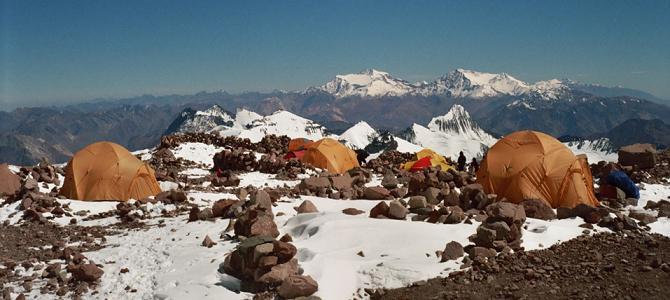
 Polish Traverse itinerary - these dates are guaranteed to operate, as soon as you book, and make a full traverse of the mountain, so you ascend one side of the mountain to reach the summit, and descend the other side on the normal route. This itinerary is great for acclimatisation, and allows you to see more of this stunning region, which is important to keep you motivated and locked in for your ascent.