Here
we rate different types of exercise for preparing
you for good mountain fitness, and highlight the
drawbacks of some of them. For those of you who
are using (or plan to use) personal trainers, we
offer some advice on what to ask them to prepare
you for, and some of the factors to be aware of
when using a trainer, to ensure that you prepare
as well as possible for your course.
Timescale? Over a period of six weeks of intense training,
you should be able to get to 80% of the fitness
you would gain over six months.
The holistic approach
The summary of all the training
aspects considered so far is to take a holistic approach
to your preparation, and it is this attention to detail
and care for yourself that must continue on the course.
However we have heard of laughable ideas, such as taking
the batteries out of a TV remote control to make you get
up more often, used by people who consider this a worthwhile
method of training. A holistic approach is not lots of
little bits, as these don't add up to much. Rather it
is doing many large actions that compliment each other.
We
always hear 'my personal trainer says...'
It's great you are using a trainer,
as that shows your commitment to your fitness, but when
a trainer says something along the lines of 'yes but you
need to adapt those training planners to include more
gym work', just ask the following questions; 1) are they
suggesting less than one hour running, so they don't have
to do an hour running with each client each day?, 2) is
the gym work good cross training for the joints on simuated
rough ground, that cannot be bettered by outside exercise?,
3) has your trainer done something similar to your course
(e.g. Mont Blanc) so they actually know what they are
talking about? Generally you know the answers without
even asking. Make sure you are doing training that is
going to benefit you, not the personal trainer. Biceps
won't get you up the hill.
Types of exercise to consider
RUNNING
-
good for aerobic & anaerobic fitness though
take care with your joints.
SWIMMING
-
excellent aerobic workout that does not put major
stress on joints.
CYCLING
-
good for strength & endurance, and useful throughout
training schedules.
ROWING
-
very good for aerobic endurance, stamina, and for
muscle capacity building.
AEROBICS
-
dependant on type of exercises, this is useful for
flexibility & stamina.
CLIMBING
-
this naturally enhances strength & muscle power,
and climbing skills.
WALKING
-
only useful as a warm down exercise, as it gives
a low level of fitness.
General principles of training
FLEXIBILITY
-
flexibility exercises are important so no muscle
damage occurs during exercise.
DURATION
-
the effect of aerobic exercise is optimised in training
periods of over 30 minutes.
TARGETS
-
always push yourself in training, which can be done
by setting goals or targets.
RECORDS
-
record completed exercise so that you have a diary
to discus with advisors.
WELLBEING
-
psychology is important in training, and you must
enjoy the exercise you are doing.
VARIETY
-
varying the exercise can be beneficial as different
muscle groups are exercised.
EQUIPMENT
-
use equipment that is designed for the type of exercises
you are participating in.
HEARTRATE
-
monitor your heart rate and try to keep it within
the suggested boundaries.
COOLING
-
warm down periods prevent cramps and enable the
exercised muscles to cool.
DIET
-
diet is a factor that can assist the training and
provide the energy when needed.
SPECIFIC
-
doing the sport you are training for, can be part
of your training programme.
INJURIES
-
if you injure yourself during training, take advice
as to when you can start again.
Timescale
It
is likely that you have booked on a course less than a
year ahead, so you must try and condense all these elements
into the time available to you. If you train hard for
six to eight weeks, then you should be able to get to
about 80% of the level of fitness, as if you had been
training for over six months, however your psychological
training is likely to suffer slightly in terms of determination
and the drive to push yourself to your limits.
FREE
training podcasts
FREE
Podcast Training
for Mont Blanc
A no holes barred podcast, to fully
explain what an ascent entails physically
and technically, including several examples
of hill training.
FREE
Podcast
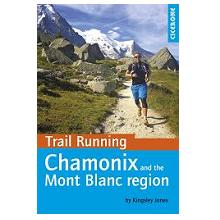
Starting out trail running
A fast growing sport, & this podcast
explains what it involves, how to get
into it, and exactly what equipment
that is required...
See
our Alpine blog, by clicking on the Word-press logo
to the right.
Itinerary
flexibility to allow you to take full advantage
of the weather windows on any day, to maximise your
summit chances.
Our
prices are fixed in £ Sterling, to protect
you from euro fluctuations, so you can budget accurately.
There
is a choice of routes to opt for, depending on the
weather, conditions, and your experience.
Any
further questions?
A
key part of choosing a company is being able to come and
talk about your plans with an experienced course advisor
face to face. In an increasingly virtual world, we know
our clients value speaking to real people, getting open
and honest advice. The vast majority of our clients are
British, and our office and outdoor store is based in
Windermere in the English Lake District.
Get
in contact to arrange a meeting, and come in for a coffee
to discuss your course in person with a trip
advisor.