This
page provides more itinerary details and information about skills, conditions, and equipment for your Mont Blanx trip. These include the queries that we are most frequently
asked by those who have never been on an Icicle course
before. Some
of the questions would make a White House
Press Secretary look for an easier job, whilst others
will probably make you laugh. At least you can learn from
it all, and if you still have any queries after reading
this, then please send us an e-mail, or call. Click
on the question that you are looking for the answer to...
Many of those who are thinking of booking a Mont Blanc trip, find our 'The Hard Facts' booklet a useful and honest reality check. We encourage all climbers to give it a read before they book; click
here. You won't find a more brutally honest, and realistic summary out there, but it's not designed to scare you, but to cut out any hint of marketing, and replace it with honest facts. Mont Blanc isn't an ideal first 4000m peak, it's ascent has a potential of relatively high objective dangers, and it's physically harder than almost every climber thinks. Please read it!
We genuinely want you to be as informed as possible before any attempt on Mont Blanc, and this page goes a small way towards that. If you have any questions at all after reading this, don't hesitate to contact us to set up a meeting in our Windermere office, or if you prefer we can schedule a Zoom call with one of the guiding team, to talk you through any aspect of the course, itinerary, equipment, ascent, or training. We don't want to leave any stone unturned, in providing you as much information as possible before your trip to Chamonix.
Are
my skills enough to summit?
Do
you want percentages and statistics,
or to be told you have an excellent
chance? Very few clients like to be
told that they are the greatest variable
in the equation, but it is true. For
each course we outline the level of
previous skills or experience that is
required for an ascent. If you approach
us stating that you have never worn
crampons, but "are a fast learner",
we won't accept you, as you would lower both your and your climbing partners chances
of summit success, as well as reducing the safety margin. Ultimately we have to accept at face value your self-declaration of fitness and having the fitness and pre-requisite skills, unless it is evident that you have mis-declared, and are endangering others safety and / or chances. The other main personal
factor is your physical condition. This
is tackled by another question on this
page. If you are in any doubt as to
the level of your skills, then either
consider a longer course, or perhaps
a few days of refresher or acclimatisation
training before the course.
What
about weather windows?
In
our experience there is on average only
one week a year when
the chosen summit cannot be reached,
and other safe objectives are offered.
We know the local weather systems and
conditions so well, that if there is
any possibility of an ascent, we will
select the best option. In addition,
our local presence gives us a massive
amount of greater flexibility, in terms
of changing hut and cable car bookings, providing genuine logistical in-resort support to our guide team and clients.
This is a key factor that gives us better
summiting records than any other operator.
In addition we carefully schedule each
course to only operate in the periods
of best weather and conditions and all
the
courses have carefully planned itineraries,
designed to build your stamina and skills.
Our aim is to make you achieve your
goals in the safest and most enjoyable
way. However nothing in the world of
mountaineering is guaranteed, and our
summiting record could never safely
be 100%.
What
level of fitness do I need?
The
fitter you are, the enjoyment you derive
from the course will increase. The ‘Course
Info Pack’ that you receive upon
booking includes training plans &
advice. If
you are in
any doubt as to the demands of any course,
or your training methods, then look
at the
following page; Training
Page, for
information and advice. Inevitably, some clients, doubting their
fitness or ability, have chosen to pull
out from summit attempts. If possible
we offer alternatives. For an attempt
on Mont Blanc we suggest that you are
capable of running a half marathon in
a respectable time (c. 1hr 45mins).
Many people ignore this, especially
those who have been to a higher mountain,
such as Kilimanjaro, as they try to
compare the summit days. One mountain
is a tough hike on the final day, and
you could almost do it in trainers.
The other involves the use of axe and
crampons just to get to the hut, and
all the time above it. These peaks are not
comparable in any way. Almost anyone
can ascend Kilimanjaro, but only those
who have trained well have a good chance
on Mont Blanc. In addition you need
to be hill fit, used to long mountain
days carrying a pack, and long scrambles
over broken mountain terrain. Don't
train for the minimum and hope you will
get away with it. You've read it here
that an ascent of Mont Blanc will probably
be the toughest physical effort of your
life. Don't ignore this.
How
about Diamox for the altitude?
No,
no, no! Does that answer it? For the
height of Mont Blanc, the benefits of
taking Diamox are far outweighed by
the side effects. Diamox is a drug that
aids the body to acclimatise faster
than naturally, but if you are worried
about this, it is a lot simpler to book
on our acclimatisation weekends instead.
Also you must not take high doses of
Asprin whilst taking Diamox, as the
combination can be fatal. The key side
effects of Diamox are frequent urination
(it is a diuretic prescribed for those
with fluid retention) which is an issue
for climbers in terms of getting cold
and dehydrated, parethesias (pins and
needles sensations, and hot aches),
a loss of appetite, nausea, vomiting,
diarrohea, sluggishness, drowsiness
and confusion. With that list, who in
their right mind would even consider
it for a relatively low altitude such
as Mont Blanc.
Do
you accept charity ascents?
NO
we never knowingly take bookings from
people who openly inform us that are
involved in a charity or challenge attempt
on Mont Blanc. The reason for this is
that we believe it puts the individual
under too much pressure with a focus on
one named summit. This could be at the
detriment of mountain safety, which
is both unprofessional, and has a negative
impact on the enjoyment of others in
the group. Also many activities insurance
do not provide any cover for charity
ascents of mountains.
Will
I require a sleeping bag?
If
you are staying in mountain huts a sleeping
bag is NOT necessary, as the guardianned
huts all provide enough blankets and
sheets to keep you warm. The huts all require you to take and use a sleeping bag liner for hygiene
reasons, and it's actually a cool cover for when the hut room is hot or stuffy. The only other items you need for staying in a hut are a very small selection of toiletaries (there's no running water), so most pack just a toothbrush and paste. Remember to take a head torch if staying in a hit, for finding the toilet at night, and for your early start the next morning.
How
technically difficult is it?
We
have heard laughable quotes ranging
from "it's just a walk" to
"vertical ice and rock walls". As
far as grades go, the Gouter route on
Mont Blanc is classified as Alpine PD
(Peu Difficile / Little Difficulty)
grade, but this doesn't give you a real
idea of the skills you will actually
require. Read the pre-requisite skills at this link. As well as the technical skills, you need the mountain-craft of great balance combined with
the ability to move quickly and efficiently
over broken mountain terrain, as well
as being confident on steep ridges.
If you meet the pre-requisite requirements, acclimatise
well, and you have the required level
of fitness, then there should be no
problem. The guide is there to look
after your safety, but if you do not
meet the pre-requisite skills or fitness
requirements, then you must respect
their decision if they turn you around
on a mountain, or advise you against
attempting the mountain. For example
if you are falling over and have poor
balance, it is not safe to ascend to
the Gouter hut, let alone the summit,
and the guide has the full authority to turn
you back for your and their safety.
If you have poor fitness, and are exposing yourself and others to risks for too
long a time, the same applies. We advertise
very honest pre-requirements for this
course, and have not seen any other
operator outline them anyway nearly
as clearly, in the hope that you
take these points on board and train
appropriately, as well as gaining the
pre-requisite level of skills. Mont Blanc is getting more technical with increasingly dry conditions, with sections of hard neve / ice where there was historically soft snow, so you need the skills to keep you (and guides) safe. Climate change has made the mountain technically harder.
How will high
altitude affect me?
If
you knew the answer to this
question, you probably would not need
to book onto a course, but as you are
unsure about the effects of altitude,
rest assured that you are in the best
qualified and most capable hands
of an IFMGA mountain guide, who has
received specialist altitude medicine
and rescue training. To further put
your mind at rest, mountain rescue helicopters
can fly to any summit in the Alps, so
a rescue off Mont Blanc is possible.
Altitude sickness affects people in
different ways. At altitude, you will
notice the air is thinner, though most
of the feelings of nausea are due to
the effort of the ascents. Most people
sleep very lightly at altitude, so we
try to arrange for alternate nights
to be spent in the apartments in Chamonix.
Is
it suitable for <18's or >60's?
Mont
Blanc is a huge physical effort, and
many insurance companies ask for extra
premiums or medical details for those
over 60. This is one key reason we check
your activites insurance before starting
any guiding. We have had people aged
well over 70 summit Mont Blanc, but
in our experience we have found that
those aged over 60 may benefit from
either a two week course, or a full
week of acclimatisation in the Alps
before a Mont Blanc attempt. There's
no reason why a 60 year old should not
summit, while a 20 year old could fail.
It's simply that older clients may have
the patience to increase their chances
over a two week period, to reduce the
stress they are putting on their bodies.
At the other end of the scale, whilst
we only accept adults (i.e. over 18)
booking independently on Mont Blanc,
we highly recommend that you are over
21 for experience, and better deleveloped
aerobic and endurance. We only accept children
aged 16 or more at the time of the start
of the course, on a private 1:2 Mont Blanc course on the agreement that
they climb with a parent at all times,
every day of the course, and in event
of a parent pulling out, the child will
not be guided 1:1 on Mont Blanc, as
the guide cannot act in loco parentis.
What
are the summiting statistics?
At
Icicle we have successfully guided over
2500 clients to the summit of Mont Blanc
since we started out back in the year
2000. We think that's more than any other UK
operator, but unlike some
amazing claims of 95% success rate that
we've seen elsewhere on the web, we
would honestly say that ours varies
massively week on week, year to year.
The key variable is always the level
of fitness and experience of the clients,
which has statistically had greater
influence on the summit records than
the weather. At the high altitude of
Mont Blanc, it doesn't take a lot for
the weather to become tough to cope
with for inexperienced or less fit clients.
A wind speed of 60km/h doesn't sound
much when sitting at sea level, but
up on the summit ridge, when tired and
perhaps at the limit of your comfort
zone, it can be too much. Another key
factor is the number of days available
for a summit attempt. A guide can take
a maximum of two clients on Mont Blanc,
so when considering which operator,
look carefully at the number of days
of 1:2 guiding. We offer 4 full days,
wheras most cut costs by including only
2 or at best 3 days at a 1:2 ratio.
This probably affects your summit chances
even more than the weather, experience
or fitness. On our courses the itinerary
is designed with maximising your chances
in mind, not on corporate economies.
Having said all this, when the weather
is good, and the clients have done their
training, there is very little to stop
you making a successful summit bid.
On any given day the summit chances
are realistically the same for every
operator. You simply have to ask which
other operator gives you 4 potential
summit days in their itinerary. We haven't
found one yet, which goes a long way
to explain why our real summiting stats
may be higher than others. Again
we re-iterate that statistics are only
numbers, and there is no break down
to categorise whether any failed summits
were down to weather, fitness or experience,
as that assessment is subjective. Figures
simply show that on some years a greater
percentage of people summit than on
others. We hope you choose Icicle for
better reasons than some relatively
meaningless statistics...
Do
I need to spend lots on kit?
NO
YOU DO NOT. We cannot stress this enough,
as many people (probably most) spend
far too much on the kit they buy before
a course. Guiding is expensive (they
are paid over £350 a day), and
we have no wish for the expense of equipment
to put people off climbing with Guides
who are the qualified and experienced
climbers in the world. A lot of clients
use booking on a course as an excuse
to treat themselves to loads of new
kit, but that is their choice, and for
most courses we require you to arrive
with nothing more technical than the
clothing you would go winter walking
in the UK in. You can rent everything
from boots to jackets, rucksacks to
ice axes and crampons. We hire a large
range of equipment from only a few £
per item a week. Click
HERE for hire equipment list.
Compare a £100 hire bill of modern
kit, to a £1000 shop bill for
items that will be outdated in a couple
of seasons. One item that people often
forget is a long sleeved base layer
top, in order to protect your arms from
abrasion against rock / snow, and from
sunburn.
What
boots are most suitable?
This
is probably our most commonly asked
question, so we have produced a specific
page to answer these queries. The link
is Key
Alpine Kit.
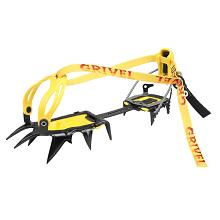
With climate change, and only offering ascents in the core season for Mont Blanc, B2 mountain boots are the ideal for mist weeks. If there is cold weather (temperatures or fresh snow), then the thermal capacity of B3's would be preferrable. Definitely altitude double boots (or plastic boots) are overkill, and likely to cause issues with sweaty feet and blisters. B2's generally have a crampon heel clip 'step' on the heel at the rear, and require a plastic toe bail for the front. B3's accept all types of crampon,
and do not flex at all. If you are considering
buying boots for mountaineering, the most versatile for Alpine climbing are definitely B2's, but perhaps consider a decent pair of gaiters to keep they drier and increase their thermal capabilities. If you are in
any doubt as to the suitability of your
boots, we advise you to take them on
the course, and our team will check
your equipment. If they consider the
boots unsuitable, they will advise you
to hire some boots for approximately
£10 per day. The most common reasons
that we reject boots on courses are
that they are too flexible to accept
crampons, and if they have too little
thermal qualities to keep your feet
warm / free of frostbite. See also the
answer to 'Can't I wear B2 boots?', click
here, or a full blog post click
here.
Can
smokers climb Mont Blanc?
Some
of the guides smoke (a tiny minority),
but their fitness and acclimatisation
is second to none. Some facts can not
be ignored. In smokers the rate of decline
of lung capacity can be three time the
usual rate. This is because the tar
on the surface of the lungs reduces
the capacity for gas exchange. As lung
function declines, breathlessness begins.
Smoking produces more carboxyhemoglobin,
which means that it removes a percentage
of the hemoglobin from active oxygen
transport. In effect this moves the
oxygen dissociation curve to the left,
when a right shift is required for acclimatisation.
Smoking at altitude causes hypoxemia,
which will restrict the individuals
ability to adapt to the reduced oxygen
tensions. In other words smoking inhibits
the ability to acclimatise. In our experience
we have seen many smokers succeed on
Mont Blanc, but there have been some
notable failures to acclimatise. On
the other hand, there is some medical
advice that suggests that people who
give up smoking for a few weeks before
their ascent significantly increase
their chances. Your life choices are completely up to you, but if you smoke, you've lessened your summit chances. Also no smoking is permitted in any course accommodation or in mountain huts.
What
if the Friday is bad weather?
On
our scheduled itinerary, the Friday
is the ideal for the Mont Blanc summit
day. So what happens if the weather
is sub-optimal on this day? In this eventuality we will make every
effort to advance mountain hut bookings
on Mont Blanc by one or more days, to
the latest realistic summit weather
window during the week. In so doing,
the huts where we source alternative
nights bookings might not be the Gouter,
but possibly the Tete Rousse / Gonella
/ Cosmiques / or even a base camp on
the mountain. It's our ethos to try
and give you a summit attempt, even
if the weather dictates that it must
be earlier than Friday. Obviously your
acclimatisation won't be perfect, but
at least you'll have given the summit
a shot. The alternative is you are better
acclimatised, but have no summit attempt.
When booking on a one week itinerary,
you need to consider the implications
of this scenario carefully, and it is
why our fitness and mountain skill pre-requisites
are higher than any other operator we
have seen. We understand you want a
chance for a summit bid, even if it
comes at the cost of ideal acclimatisation,
and we try and make it happen when the
hut spaces can be advanced and the guide
considers it safe for you to make an
early attempt. With this in mind, your
acclimatisation and preparation before
the trip are of paramount importance.
We offer UK Alpine Training Weekends
(link),
and you can arrive early for an Alpine
Acclimatisation Weekend (link)
to ascend to altitude (even with the
option of an extra night in a hut) before
your guiding starts. What you put in
before, might dictate what you achieve.
Every bit of training and acclimatisation
before your guiding, might make the
difference between success and failure,
especially if a summit weather window
for Mont Blanc has to be advanced to
earlier in your guided week. You have
been warned!
What
type of insurance is needed?
Our
Booking Conditions require all clients
booking on a course to arrange activities
insurance as soon as their booking has
been confirmed (by e-mail or in writing).
You must check that your policy includes
cover for the following: medical expenses,
mountain search & rescue, personal
accident, money & documents, any
travel delay, personal liability, legal
expenses & cancellation, as well
as other circumstances for which you
require cover. We recommend that you
use BMC Alpine & Ski insurance: www.thebmc.co.uk or 0870 010
48 78. It is highly unlikely that
any non-specialist climbing insurance
will provide this level of cover. Upon
arrival on a course, you will be asked
for documentary proof of your activities
insurance. Full details of the cover
provided by the BMC and Snowcard insurance
policies are on the insurance page (click to link).
Is
it like the accounts I've read?
We
get several enquires each year that
ask something along the lines of "I've
read on the internet that the ascent
can be very busy with lots of stress
and impatience. I don't want to encounter
this. Is it true, and how do I avoid
it?", and our response is as follows...
The huts on Mont Blanc are only open
from early June to late September each
year for summer ascents, and they are
pre-booked and full every day of the
season. We book our hut spaces up to
a year in advance to guarantee our spaces.
Mid week is just as busy as the weekends
or holidays. It is a busy mountain,
but you will only encounter issues of
crowding if you are not really the level
of fitness required for the ascent.
Well trained and acclimatised guided
groups tend to leave behind the inexperienced,
unfit, or poorly acclimatised (generally
unguided) groups. There are a few sections
on the ascent where it pays huge dividends
to have timed the ascent well and respected
the suggested timings as each guide
explains to their clients. These are
the summit ridge which is narrow and
exposed, and the Gouter couloir. If
you are slow you arrive at the summit
ridge late and have the worrying passing
of inexperienced climbers with dangerous
ropework to negotiate, then you arrive
back at the Gouter hut later and have
to cross the Gouter couloir later when
the temperature is higher and there
is a greater risk of rockfall. The nightmare
stories on the internet are 99% written
by people who have made scary errors
during their ascent, and who are the
cause of the issues that they write
about. A well guided ascent of clients
who have trained well and are acclimatised
should be slick, successful and involve
no epics!
What
week for the best weather?
You
wouldn't believe how hard it is to predict
weather, and though we have been operating
courses well over a decade, there is
no clear pattern. In the Alps it is
slightly easier to predict the weather
patterns, than say in the UK, as there
is a stronger continental influence
on the weather systems. We can only
predict the weather for a particular
week in the Alps during as season, as
accurately as you can for you home on
the same week. During the course we
can provide you weather forecasts with
a high degree of accuracy. To view web
links to some of the better weather
sites that we use, you can visit this
link; weather
forecasts.
All we can provide is an outline of
the general tendancies that you can
often expect. For what they are worth,
some people attempt to provide very
generalised 6 month forecasts, adapting
the current weather for fairly predictable
climatic shifts, such as El Nino years
or the after effects of climatic disruptions
like the Eyjafjallajokull eruptions
in September 2010. The forecast of one
of the long range sites that is specific
to the Alps is at; TVmountain,
and if you don't speak any French you
can translate it through Google Translate.
In terms of the generalised weather
patterns, that I stress are highly subject
to change, the outline to potentially
expect is;
June - still fairly snowy in the high
mountains, with cooler nights, and the
longest days.
July - often some of the most stable
weather in the summer, though busy with
holidays.
August - a tendancy of warm sunny days,
and convection storms in the late afternoons.
September - as the days become shorter,
the conditions often improve as it becomes
colder.
There are generally only one or two
weeks during a season when someones
chosen summit is impossible throughout
the week due to bad weather all the
time. Statistics such as this need to
be put into context in that this may
well mean that on say a one week Mont
Blanc course, people need to be fit
enough to ascend to a high mountain
hut as early as a Tuesday to attempt
the summit on the Wednesday, if that
is the only weather window that presents
itself. In these cases those who have
greater fitness and experience, are
far more likely to succeed.
What
type of insurance is needed?
Our
Booking Conditions require all clients
booking on a course to arrange activities
insurance as soon as their booking has
been confirmed (by e-mail or in writing).
You must check that your policy includes
cover for the following: medical expenses,
mountain search & rescue, personal
accident, money & documents, any
travel delay, personal liability, legal
expenses & cancellation, as well
as other circumstances for which you
require cover. We recommend that you
use BMC Alpine & Ski insurance: www.thebmc.co.uk or 0870 010
48 78. It is highly unlikely that
any non-specialist climbing insurance
will provide this level of cover. Upon
arrival on a course, you will be asked
for documentary proof of your activities
insurance. Full details of the cover
provided by the BMC and Snowcard insurance
policies are on the insurance page (click to link).
What
alternative peaks are there?
If
you cannot accept that attempting Mont Blanc might not be a possibility due to safety / weather / conditions / guide decision, cancel your space now or don't book in the first place. Yes really! If the weather is too poor or it is unsafe to
attempt Mont Blanc, or you opt out of
an attempt,
then you still have all the days of
guiding that would have been on Mont
Blanc, and at exactly the same guiding ratios (and the same pay for the guide). Whevever possible we try to find
you a good alternative. This might be technically harder Chamonix day routes, different challenging alternative summit(s) depending on your technical ability / conditions / weather / hut space / transport logistics, or more skills focused guiding e.g. teaching crevasse rescue or ropework (anchors, abseils, gear, coils, glacier travel). Chamonix day routes might include Cosmiques, Lachenal, Entreves, Marbrees, Crochues, Frison, etc. Other summits to consider (you pay any extra huts and road transport) include Monte Rosa in Italy, or Weissmeis / Bishorn
/ Breithorn in Switzerland. If a 4000m peak isn't suitable / huts full / outside your extra budget, there's far more 2 day Chamonix routes to consider including La Moine, Domes du Miages, Aiguille du Tour, etc. With climate change, we've seen periods of extreme heatwave (e.g. August 2015), and in these episodes it is not advisable to attempt the peak due to increased risks of rockfall in the Gouter couloir to safely consider an ascent. When there is an advisory (local guide office or town hall) against an ascent, insurance is invalidated if you were to go on that route. Even then, the course will go ahead, and we will work closely with you to select alternative routes / peaks / skills. We won't cancel your Mont Blanc mountain hut spaces until the day, to keep the flexibility of conditions changing open until the day. No refunds on huts are available, unless FFCAM closes access to the huts on town hall orders.
Are all the alternatives comparable to Mont Blanc technically or physically?
On weeks where Mont Blanc isn't possible, due to safety / weather / conditions / guide decision, the alternatives provided will be similar or even more challenging technically or physically. If possible we will involve you in selecting good alternatives, but a final safety decision is always with the guides. The normal Gouter route on Mont Blanc is rated PD (peu difficile), and some of the alternatives listed are technically harder; Cosmiques (AD), Lachenal (AD-), Entreves (AD-), Marbrees (AD), Crochues (PD), Frison (D+). All these routes, bar Crochues at an equal grade, are technically harder than Mont Blanc, so can provide a more challenging alternative. When other 4000m peaks are considered, those wanting a harder physical challenge than Mont Blanc could consider Bishorn with c.2500m of vertical ascent, so slightly more than the Gouter route, or if your skills and experience permit, a more technical 4000er such as Dent Du Geant (AD+). Note that on the Alpine grading system the Hornli ridge on the Matterhorn is graded AD, so these outlined Plan B routes are mainly around the technical level of the Matterhorn which is obviously a big step up from Mont Blanc in terms of its technical level. Whilst you cannot match the maximum altitude of Mont Blanc, the alternatives outlined (as well as many more that may be offered) have the capacity to offer both a greater technical and physical challenge than Mont Blanc. Whilst a equal or greater technical or physical challenge is the motivation for some people, if Mont Blanc isn't possible, some prefer easier 4000m peaks, or to use the days guiding for skills focused sessions such as crevasse rescue, if that's what you prefer. As we detail more technical alternatives than Mont Blanc, the guides are always paid the same rate as for the Gouter route, so don't worry there are no additional guiding fees for you to ever worry about. Our approach is to try and be as flexible as possible, leaving the final decisions as last minute as possible, when there is any hope of the situation improving on Mont Blanc, as we understand that was the original focus of your trip. In the rare situations that Mont Blanc is not possible, by booking on this course, you accept this strategy for providing Plan B's (either those named above, or other options agreed in resort), and that there is no reduction in course price, as all elements of guiding and course inclusions will still be provided.
Select
a question...
We all questions and itinerary details to this page frequently, whenever we get an interesting query that we think others will benefit from reading an answer or more detailed explanation.
Skills
& Training
Are my skills enough to summit? link
What level of fitness do I need? link
Is it like the accounts I've read? link
Can smokers climb Mont Blanc? link
How technically difficult is it? link
What alternative options are there? link Are the alternatives comparable? link
What are formal Plan B's? link
Equipment
Do
I need to buy lots of kit? link
What boots are most suitable? link
Will I require a sleeping bag? link Can I wear
B2 boots?link
What will my pack weigh?link
Weather
& Altitude
What
about weather windows? link
How will high altitude affect me? link
How about Diamox for altitude? link
What's the summiting statistics? link
What week is the best weather? link
How to you adapt if Friday is bad? link
Insurance
What
insurance will I need? link
Mont Blanc for <18 or >60's? link
Do you accept charity ascents? link
Other
queries
Is
the climb suitable for novices? link
Is the summit guaranteed? link
What if the huts are closed? link
Which route will I climb? link
How are partners chosen? link
What pre-requisite skills? link
FREE
Podcast Training
for Mont Blanc
A no holes barred podcast, to fully
explain what an ascent entails physically
and technically, including several examples
of hill training.
No other course provider will ask this question,
but we do as we want you to be sure that this
is the right course. It costs a lot of money
and time, and we want you to have a good chance
of success. Mont Blanc isn't an ideal first
Alpine 4000m peak, but on the other hand it
is not technically difficult. You require
excellent fitness and stamina, as well as
great balance combined with the ability to
move quickly and efficiently over broken mountain
terrain. An ability to learn quickly is useful,
as you will be taught a lot during the week.
What pre-requisite skills?
We
clearly advertise the pre-requisites of 2+ days of crampon use, graded rock scrambles, and ideally a 4000m Alpine peak.We take your course booking form experience at face value, and that if any pre-requisite skills are missing at the time of booking, that you wil obtain these before your course. If you arrive without the skills, the guides or Icicle staff may have to make a safety decision if you can undertake elements of the course or not. Just get the pre-requisite skills - it's easier for us all that way!
A
guaranteed summit?
We
can't book the weather, but we do guarantee
to do our best to maximise your summit chances
by tailoring the course to you, the individual.
If you cannot summit (through your skill or
technical level or the weather or objective
dangers such as rockfall), these are elements beyond our control. Please note that we cannot issue a credit
voucher for the value of any 'unused' elements
of your course, as guiding is not transferable
as it is provided anyway and the huts are
pre-paid to secure a reservation.
Can
I wear B2 boots?
If
you have your own B2 boots it is generally possible to ascend
Mont Blanc without needing to hire B3 boots, and they are our primary recommendation for boot type, for those with experience using them with crampons.
On warmer weeks this is possible, but on the
very limit of the thermal properties of the
boot. If you suffer from poor circulation
or feel the cold, it's not worth risking it,
and B3's are recommended. We don't hire B2
boots (though they can be hired locally in Chamonix for c.£15 per day), as aside of their inferior thermal
capacity, compared to B3 boots, they are more
flexible so there's a higher risk of shedding
/ losing a crampon, and breaking the crampon
bar. Either could thwart a safe ascent. Another
issue to weigh up is that B2 boots are often
cut lower on the ankle than B3's, so do not
offer as much support, especially on rocky
ground or icy patches. There is a higher risk
of twisted ankles or strained muscles too, if you are not experienced in this terrain.
With step in crampons with a heel clip, with
B2 boots they must be well fitted to minimise the heel clip pressing against the
back of the heel on the achilles tendon, and
this can lead to inflammation and pain. Many
people do use B2 boots without any issues on Mont Blanc, when the weather is
good,
but you never know the forecast in advance of travel. If you opt to bring your
B2 boots to the Alps, you can always change
your mind during the week and hire some B3
mountain boots. Read more here; link. If you have less mountain experience, and don't know what all this chat about B2's and B3's is about, hire some B3's as they'll give you more support and are warmer, albeit heavier, but are more durable.
If
the huts are closed?
On
some very rare occasions the local town
hall / prefecture / mountain rescue decide
that the conditions are too dangerous on
Mont Blanc, and put an advisory against
climbing the mountain by a certain route.
In these cases we never make any ascent
of the mountain, as it would invalidate
the guides insurance, and yours too. Exceptionally
the hut(s) on the mountain might also be
told to close too, and this effectively
closes the mountain by that route. In these
circumstances of force majeur, we offer
you a suitable alternative challenging peak(s)
for the objective of the week, exactly as
we do in periods of adverse weather. If
one route on Mont Blanc is closed at any
stage, another route may still be possible,
but all other routes other than the Gouter
(normal route) are significantly longer
and / or more technical. If you are to be
in a position to consider these alternative
routes, you will need a higher level of
fitness, and pre-existing crampon skills
and good techniques. If any / all huts on
Mont Blanc are closed, you are not offered
any refund, as the guides are booked and
paid for anyway, and you will climb an alternative
summit instead.
Which
route is chosen?
For
those with low previous climbing / altitude
/ crampon / mountaineering experience, the
only viable option is usually the Gouter route
on the mountain. The guide will discuss the
traverse route with you from Aiguille du Midi,
if they consider the conditions suitable,
and your experience makes it a viable option.
This route is technically harder and is definitely
a lot longer and more physical. It is the
guide who makes the final decision, though
they will bear your preferences in mind. If
you wish to climb the traverse, it is fast
becoming common practice (potentially soon
becoming law) to only guide this route on
a 1:1 guiding ratio. This route option is
rarely available at the last minute due to
guide availability and pre-booked hut spaces,
so if you are keen to ascend via this route
in advance, then opt for a 1:1 ascent at the
time of booking. A third option is via the
Italian Gonella route, which is the same grade
as the Gouter, and though it is a longer summit
day, you avoid the Gouter couloir. This route
is generally only in condition in the early
summer season until late June / mid July.
Who
choses partners?
Many
people come to us a pair of two climbing partners.
If you wish to climb together, that is your
choice, and we will facilitate this. The guides
may highlight if there might be a better pairing
for you, but your choice will always be respected.
The majority of clients book as single bookings,
and ask how the guide chooses partners. This
decision is made on a basis of the judgements
made on your relative fitness, speed, stability,
technique, as well as personal factors such
as who you get on with. The initital choice
of two person climbing teams, from the Tuesday
morning onwards, does not always reflect a
fixed idea for the whole week, and often is
subject to change. It is key for the guides
to try and make up teams that compliment each
other, and who are likely to work well together
on the ascent. Your thoughts and preferences
are always taken into account too.
What will my pack weigh?
Virtually nothing when you're on the summit, as you'll have all the technical kit on, and be wearing most of your clothes. Ideally all that will be in your bag is a spare layer, a second pair of gloves, a snack and drink. On the way down the mountain, you'll be stripping off the clothing layers, and the technical kit once of the glaciers and rock, and onto trekking terrain. Then your bag will weigh plenty. Is it any different from at the top though, as all the kit was on you, but the bag was light, whereas now lots is in the bag but not on you. The total weight is obviously the same, but people obsess about the pack weight, so here's a few tips. 1) Get a suitable pack size 30-35 litre capacity bag, so you aren't carrying dead weight. 2) Be accustomed to walking carrying a pack, but beware of the injury risks of resistance training (i.e. carrying heavy loads). 3) Light is right is the key in the Alps, so it's more a case of being harsh on yourself when packing; don't carry a wallet with gym cards and a bus pass, don't carry too much fluids (1 litre = 1 kg) when you can buy water in huts, etc. So, how much will your pack weigh? Well it'll be about the same as on a Scottish winter climbing / walk day. If you don't know the answer to that, how have you got the advertised pre-requisite skills for crampon use for the course? This isn't meant to be provocative, but a check or red flag to ensure you actually are the level advertised for this trip. If you're in any doubt, please get in touch.
What are formal Plan B's?
If the guides have made a final safety decision not to go to Mont Blanc, there are 3 official plans for alternatives, that we provide in writing before you book, so you know what could be offered. In addtion, the team in resort may discuss other options when they are available, but this is simply so you have Plan A, B, C, & D in writing before you book. Typically the first 2 days of guiding (days 2 & 3 of your trip) would proceed as planned, for the ascent of Gran Paradiso 4061m, then here are the 3 most popular alternative plans in writing for you; Plan A - MONTE ROSA
Day 4 - Ascend to Quintino Sella or Gnifetti mountain hut
Day 5 - Climb 4000m peak(s) e.g. Castor / Signalkuppe / Vincent Pyramide / Balmenhorn, and second night in a hut
Day 6 - reserve day or descent and return to Chamonix Plan B - CLASSIC SUMMITS
Day 4 - Day climb of the Arete des Cosmiques and / or Lolo, to reach the Aiguille du Midi
Day 5 - Take Midi & Panoramic cable car to Helbronner to climb Aiguilles Marbrees / Entreves, with night spent half board (included) in the Torino hut
Day 6 - Either climb Dent du Geant 4013m, or whichever route Entreves / Marbrees you didn't climb yesterday, and descend Plan C - DUFOURSPITZE
Day 4 - drive to Tasch, train, and walk in to the Monte Rosa hut
Day 5 - ascent of Duforspitze 4634m and hut for a 2nd night
Day 6 - walk to Rotenbaden, & trains and return to Chamonix Plan D - TECH DAY ROUTES Day 4 - technical day route e.g. Chapelle de la Gliere / Aig l'M
Day 5 - tech day route e.g. Arete Papillons / Frison Roche / Index
Day 6 - tech day route e.g. Midi Rebuffat Baquet uber classic By booking on the Mont Blanc course, you accept all of the alternative plans outlined above, or agreed in resort if they differ from the above ideas, in line with the mountain guides safety call on Mont Blanc and what they think is a suitable alternative for your skill and experience, and the weather and conditions.
Any
further questions?
A
key part of choosing a company is being able to come and
talk about your plans with an experienced course advisor
face to face. In an increasingly virtual world, we know
our clients value speaking to real people, getting open
and honest advice. The vast majority of our clients are
British, and our office and outdoor store is based in
Windermere in the English Lake District.
Get
in contact to arrange a meeting, and come in for a coffee
to discuss your course in person with a trip
advisor.
Gouter couloir safety matrix - maybe our least watched, but the most important safety film we've ever shared...
Crossing the Gouter couloir is the most dangerous section of the ascent of Mont Blanc. Here's an insight into our safey matrix, and a decision making process that we use to help manage your safety. It's a bit of a geeky video, but we have decided to share it both to help keen others safer, and also to help educate our teams as to the objective risks that we are assessing every single day.